In late autumn, all kinds of fruits arrive in abundance. Hawthorn, which we call “shanlihong” in my hometown, seems to be called “hongguo” in Beijing. A famous old Beijing dish is “Chao Hongguo” (stir-fried hawthorn). One day at the vegetable market, I found that this year’s hawthorns were large and of good quality, so I quickly bought some.
I’ve eaten the Chao Hongguo at Xianlaoman twice. It was very refreshing at first, but after eating a few more, it became cloying. So I had long wanted to make some myself, naturally with less sugar! Less sugar! Less sugar! I made it once last year, but the hawthorns were small and of poor quality, and my technique for removing the seeds was not good, so the result was barely satisfactory.
In the past two years, I’ve also had a few encounters with hawthorn. Once at Microsoft, the auntie in the pantry would sometimes boil some hawthorn soup, sometimes pear soup. But the deepest impression was still the hawthorn soup: sour, slightly sweet, with a thick, silky broth like satin. Each time, I would secretly drink several cups. Another time was at the airport in Harbin, where I passed by a small shop on the way to the boarding gate and saw no less than dozens of hawthorn products, which was quite an eye-opener. I couldn’t help but buy a few. However, I’m someone who always forgets to eat snacks, so they eventually collected dust in the corner.
I adopted the method of the Microsoft auntie — boiling. The ingredients were also planned: hawthorn, yellow rock sugar, and honey. Let me talk about each one.
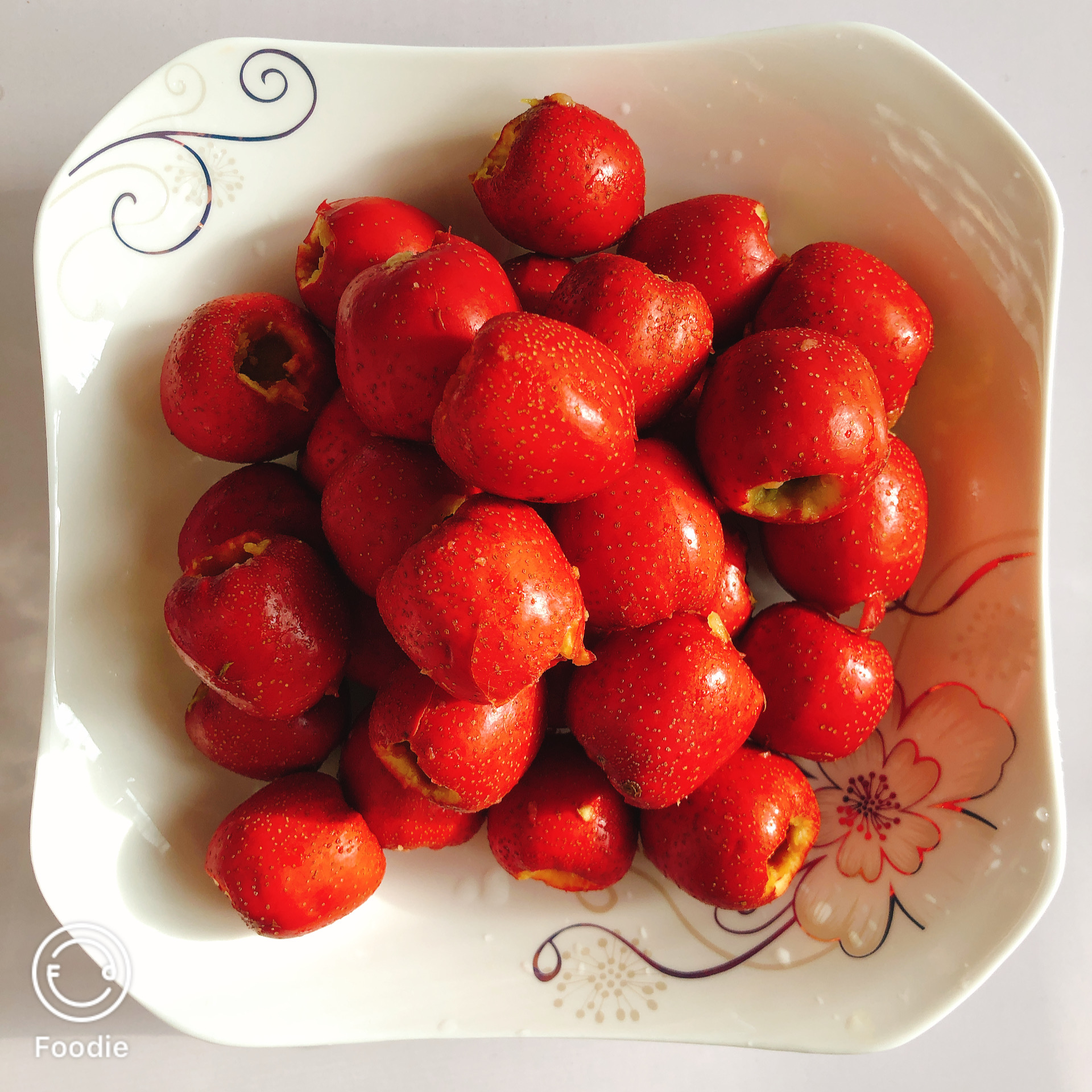
Hawthorn is relatively troublesome to de-seed. Last year, I first dug out the remaining dark, shriveled calyx at the bottom of the hawthorn, then broke it open, and finally used a fruit knife to pick out the seeds one by one. After this treatment, the hawthorn juice always had a lot of residue, and the boiled hawthorn was not aesthetically pleasing. This year, a sudden inspiration struck me: perhaps I could use the thicker end of a stainless steel chopstick to push the seeds out. Slapping my thigh, I just did it. After some exploration, it mainly involves two steps. First, use a fruit knife to dig out the stem at the top and the calyx at the bottom; the opening at the top is small, and the opening at the bottom is slightly larger. Then, use the larger end of the stainless steel chopstick to push from top to bottom; this order is very important. If reversed, the hawthorn is very likely to break. If the seeds are not clean, push a few more times.
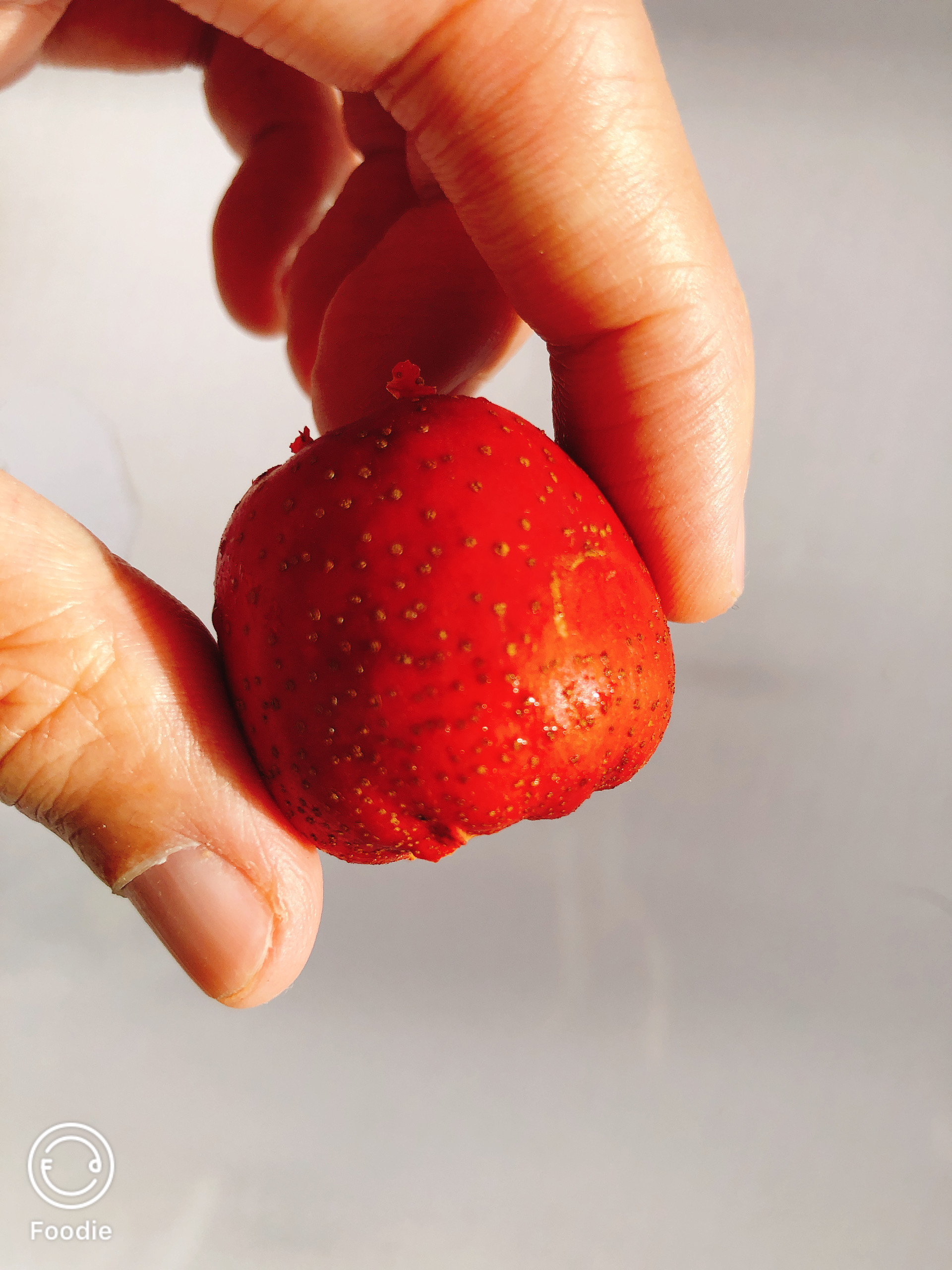 Top of hawthorn, original stem side
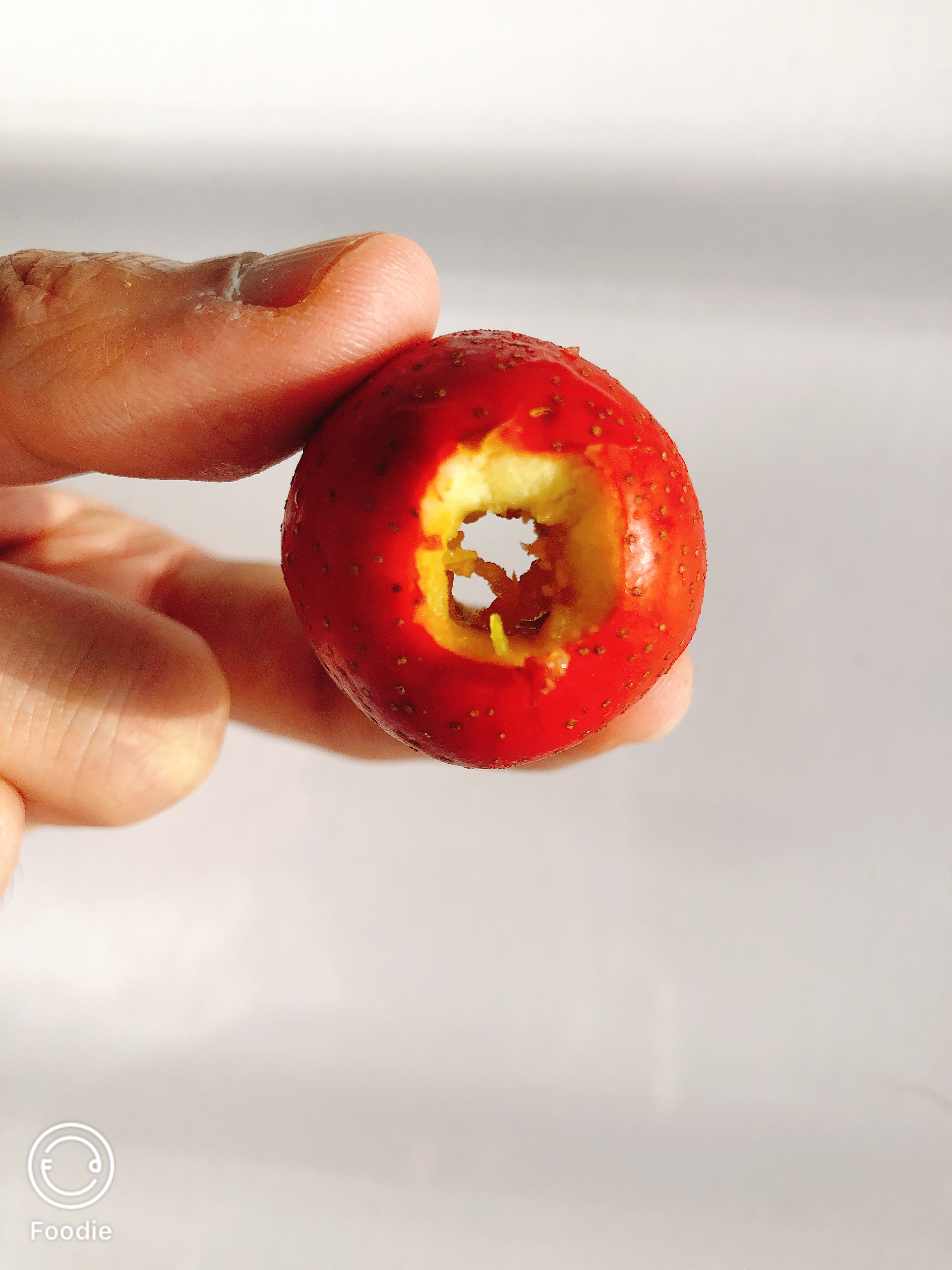 Bottom of hawthorn, original calyx side
Finally, I peeled a small plate, which looked very appetizing.
Rock sugar — I chose polycrystalline yellow rock sugar. It is made by the basin crystallization method, with no strings inside. Yellow rock sugar has not been bleached, so it feels more comfortable.
Honey — to add depth to the flavor, I also added a bit of osmanthus honey. Ever since I went to the south and was struck by the delicate fragrance of osmanthus, I have kept osmanthus honey at home, and it can be added to all kinds of sweets. I once ate the osmanthus yellow rice cool cake at Xibei Youmian and was amazed, so I bought yellow rice and glutinous rice to surprise my girlfriend. Unfortunately, it was too complicated, and I’m too lazy, so I gave up.
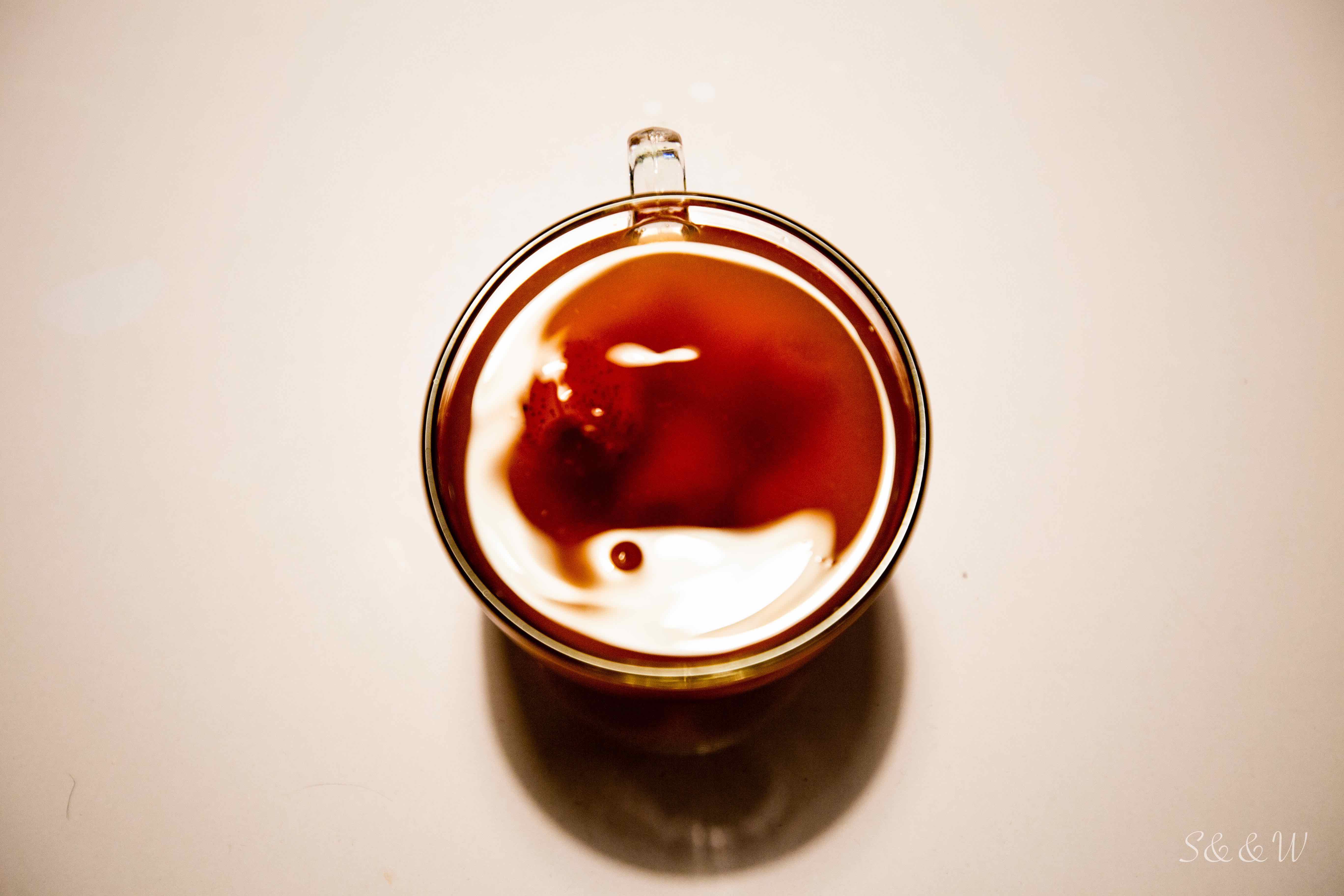
As for the ratio of water, rock sugar, and honey, it’s a very personal matter. I added a bit more water so it wouldn’t be too sweet, and I could drink more soup; my girlfriend doesn’t like it too sweet, so I added two small pieces of rock sugar. I added a teaspoon of honey. Throwing everything into the rice cooker, I selected the soup-boiling option. After about an hour and a half, I scooped some into a cup with a spoon. It was perfectly sweet and sour, with a rich texture. The appearance was also quite good:
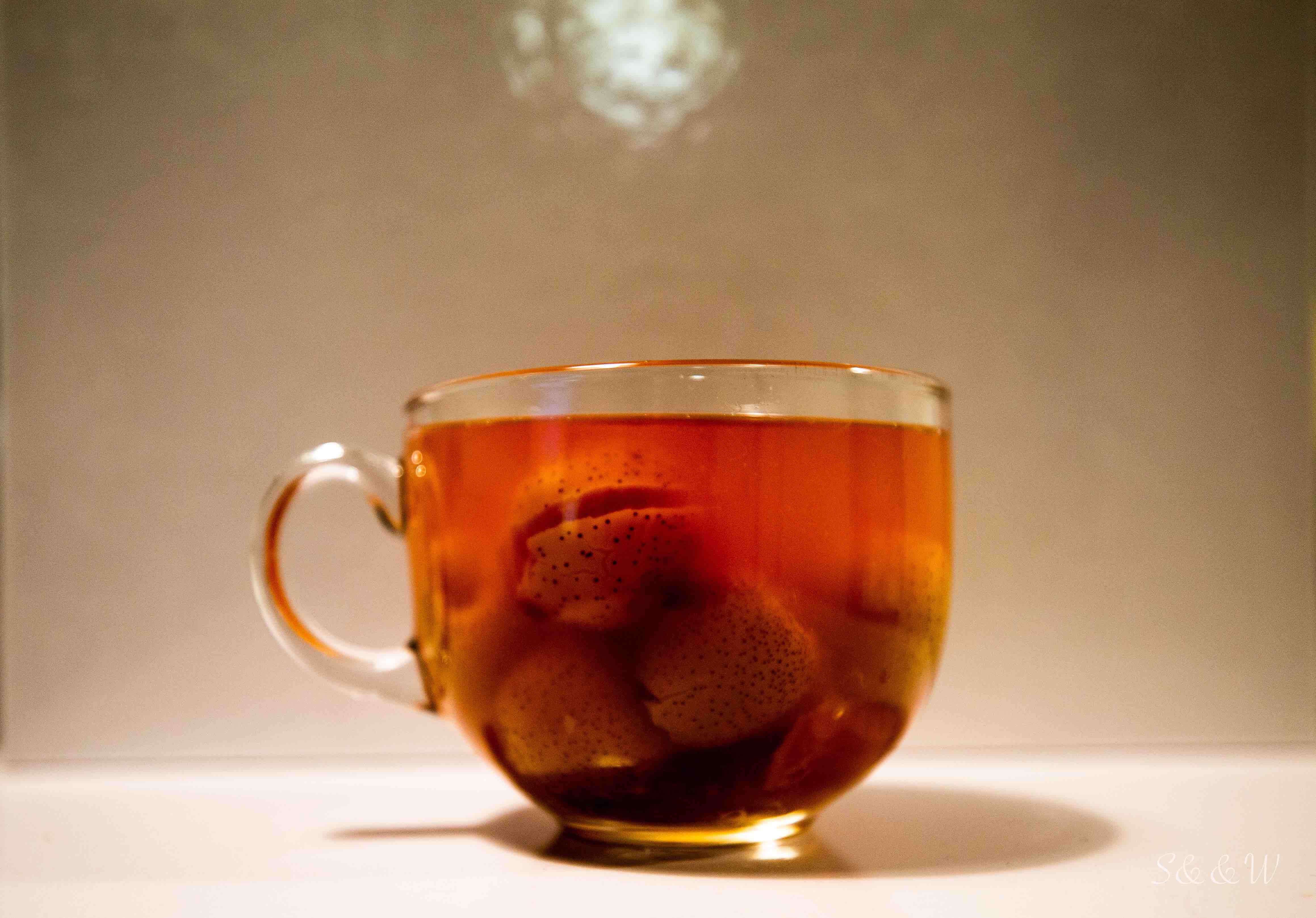
Last year, I also added a snow pear and stewed it together, and the resulting broth was also quite layered.