On a clear afternoon in early winter, I set out from Ditan Park, passed through Jiaodaokou Santiao, crossed Yuanensi Hutong, and walked all the way to Shichahai. The weather that day was exceptionally good. Under the penetrating sunlight, the entire hutong district was basking lazily, and my heart felt light and carefree.
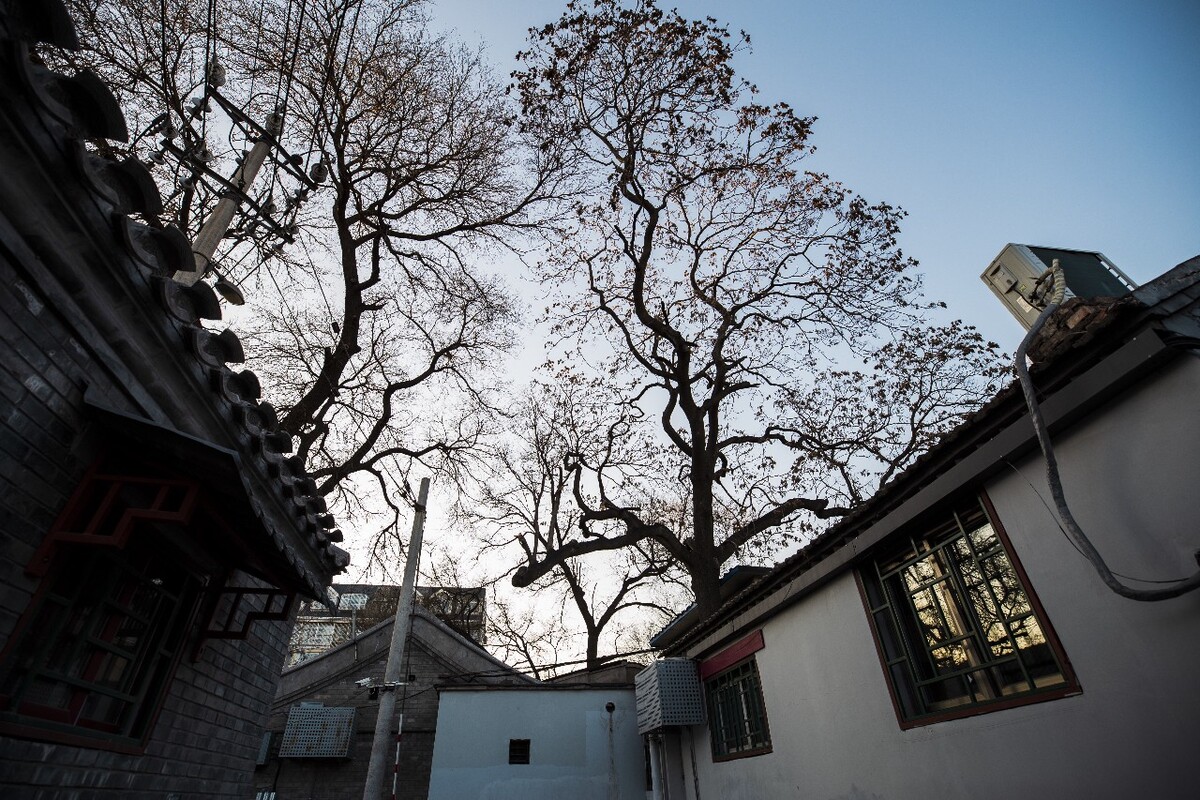
At a corner of a hutong, several large trees towered out from the courtyard houses, forming an encircling pattern high in the sky. I recognized one as a tree of heaven (Ailanthus altissima), which would be unbearably foul-smelling when it flourishes in spring; by now, its scent had long vanished without a trace, leaving only clusters of dried samaras. The other two trees had numerous branches, resembling neural networks from a biology textbook. I always enjoy looking at these trees in winter—the direction, size variations, and intricate interweaving of their trunks and branches, complemented by the light and shadow in the hutong, carry an inexplicable power that calms you, makes you think, and makes you linger, unable to move away. A hutong without trees loses its soul. I suddenly understood why those imitation ancient building complexes always feel alienating—it is precisely because they lack these ancient trees that have settled through time and witnessed all vicissitudes.
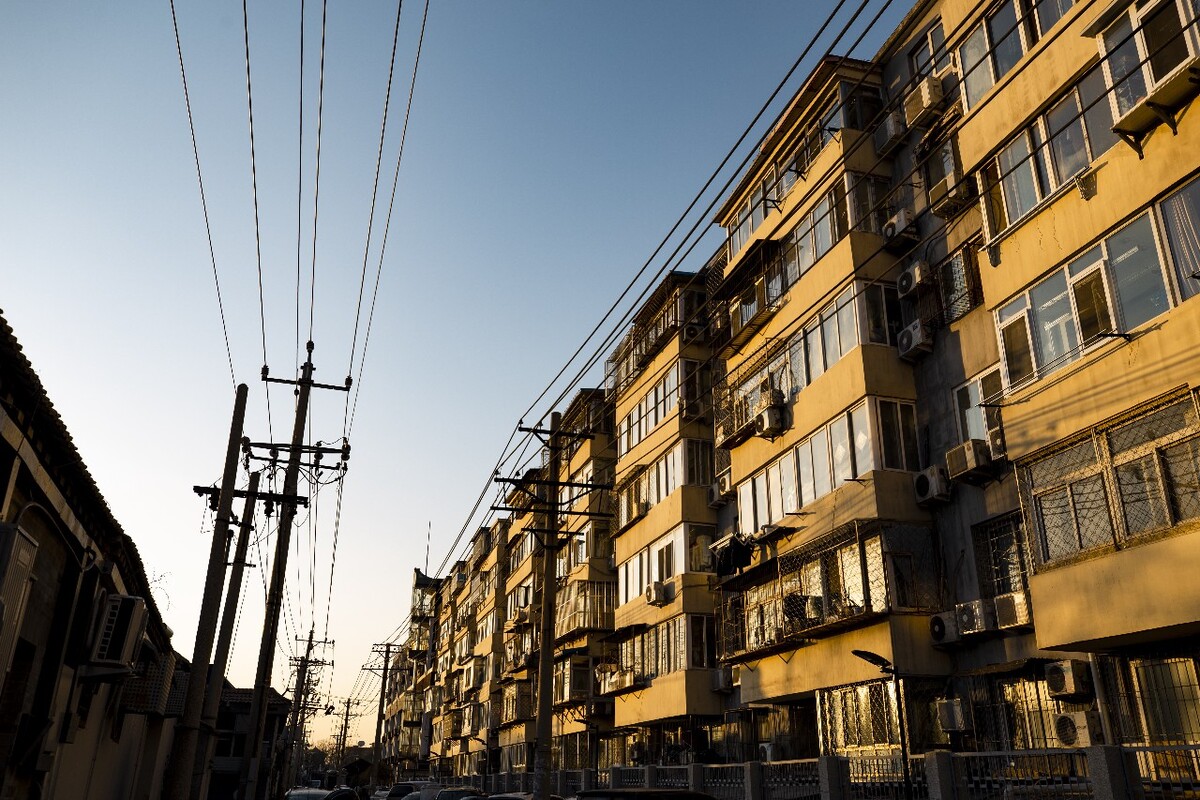
After turning a few blocks, the sun gradually sank toward the west, yet it radiated a brilliant golden hue, complementing the ginger-yellow paint on the residential building facades beautifully. Overhead,拉面-like strands of power lines connected one after another ancient telephone pole, disappearing into the distant end of the hutong like a song. The melody of light and shadow danced on the staff outlined by the wires, tugging at the heartstrings. What was originally a chaotic scene, under this tune, was harmoniously organized together, slowly seeping into the heart and squeezing out the residual fatigue of ordinary days bit by bit.
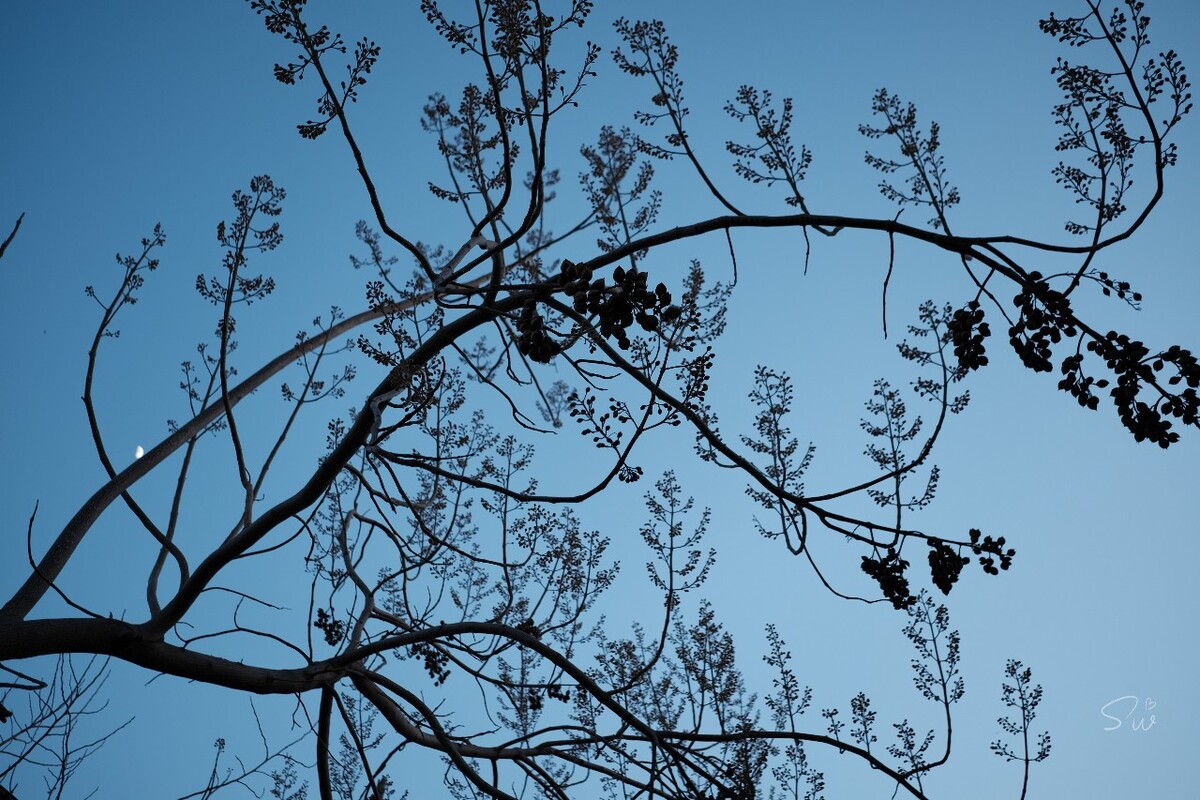
In the blink of an eye, I arrived at the Nanluo area. Looking up, I caught a glimpse of a crescent moon hanging in the southeast. Although the sky was still bright, the sun had already been blocked by low houses in the distance. Thus, the sky overhead remained a vast deep blue, but the west side began to be tinged with orange. In a hutong, I discovered a Paulownia tree bending over the courtyard wall, with clusters of buds that would only bloom next spring pointing straight upward, and almond-shaped seeds bending downward, full of tension.
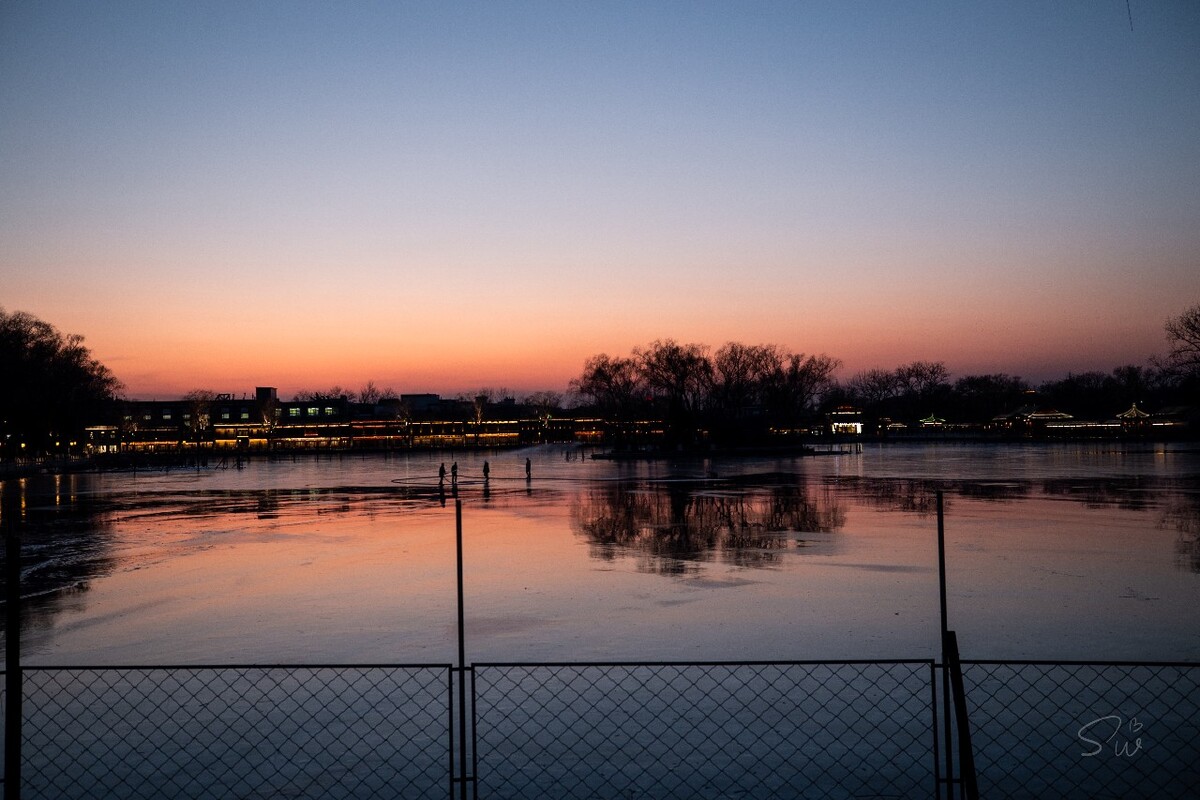
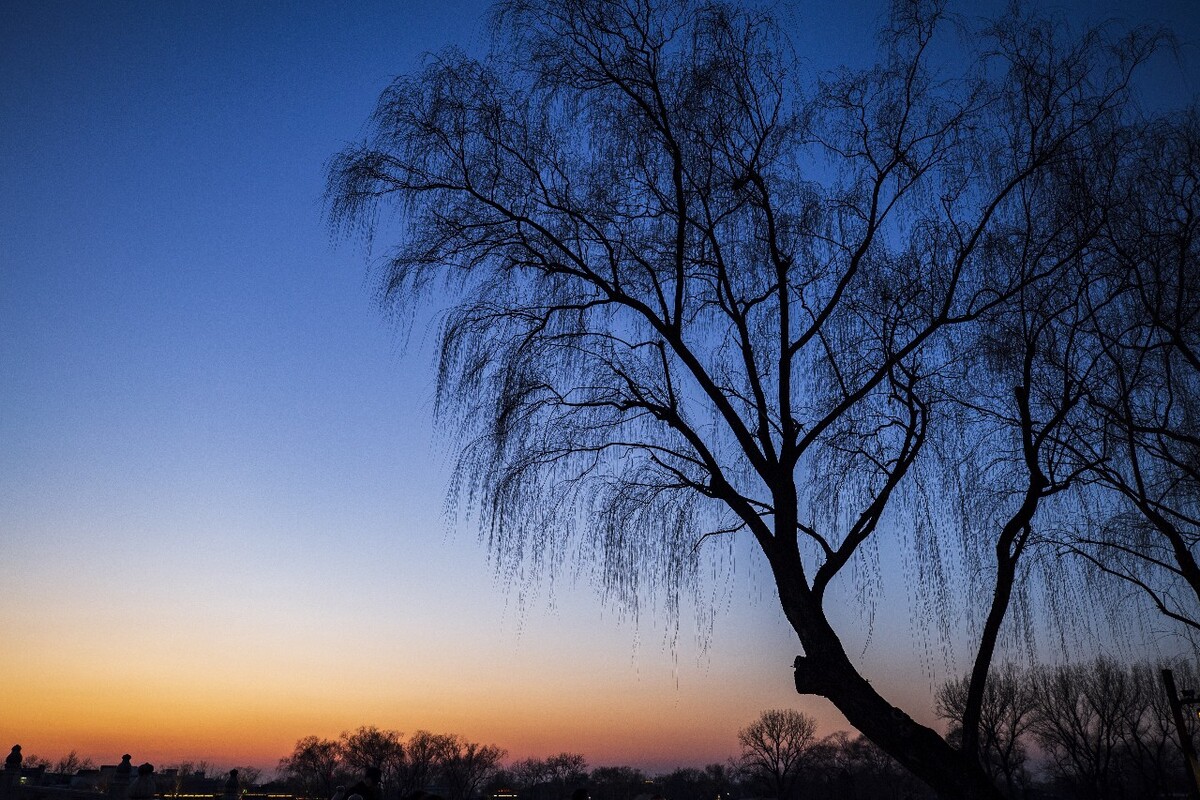
Continuing forward, along the Yu River, to Shichahai. The willows on the bank layered upon each other, thousands of strands hanging down quietly, indescribably soft. Walking onto the Jinding Bridge and looking toward the lake, the sun was gradually setting. At this moment, the sky was extremely beautiful, with layers of purple-blue, orange-yellow, and even crimson blending together, then merging into the skyline outlined by the undulating ancient dwellings in the distance. The nearby lake surface reflected the scenery on the ground, the sky and water merging into one, truly refreshing.